
How to Prepare for Bank Exams 2026: Best Strategy
Preparing for banking exams requires more than long study hours. You need the right mix of clear concepts, regular practice, revision, mock tests and time management.
If you want to know how to prepare for bank exams, first understand the latest exam pattern and syllabus. Then, create a realistic timetable and practise important subjects every day.
In addition, regular performance analysis can help you find weak areas early. As a result, you can improve them before the actual exam.
This preparation strategy can help candidates targeting IBPS PO, IBPS Clerk/CSA, SBI PO, SBI Clerk, RBI Grade B, RBI Assistant, IBPS RRB, NABARD and other banking examinations.
Depending on the exam, you may need to prepare Quantitative Aptitude, Reasoning Ability, English Language, General Awareness and Computer Knowledge.
How to Prepare for Bank Exams in 2026
Candidates wondering how to prepare for bank exams in 2026 should follow a clear and practical strategy.
First, understand what the exam requires. Next, build your concepts and start regular practice. After that, use mock tests to measure your progress. Finally, revise weak areas before the exam.
Follow these key steps:
- Check the latest syllabus and exam pattern
- Create a realistic study timetable
- Build strong basic concepts
- Practise Quantitative Aptitude and Reasoning daily
- Improve English through reading and practice
- Study current affairs regularly
- Prepare short revision notes
- Take sectional tests
- Attempt full-length mock tests
- Analyse mistakes after every test
- Solve previous-year questions
- Revise important topics regularly
In short, follow this preparation cycle:
Therefore, consistent preparation can improve your speed, accuracy and confidence over time.
Understand the Bank Exam Pattern and Syllabus
The first step is to understand exactly what your target examination requires.
Before you begin, check:
- Subjects included in the exam
- Number of questions
- Marks distribution
- Exam duration
- Sectional time limits
- Negative marking
- Preliminary exam pattern
- Main exam pattern
- Other selection stages
Bank exam patterns can vary. Therefore, always check the latest official notification for the exam you plan to take.
In addition, verify important recruitment details through official examination or banking recruitment websites before applying.
Why Is the Exam Pattern Important?
A clear understanding of the pattern helps you:
- Prioritise important sections
- Use study time wisely
- Avoid irrelevant topics
- Prepare for the actual test format
- Build a better attempt strategy
As a result, you can focus your effort on areas that matter most.
Create a Realistic Bank Exam Study Timetable
A study timetable gives direction to your preparation. However, it should be realistic enough to follow every day.
Instead of studying subjects randomly, divide your available time between:
- Quantitative Aptitude
- Reasoning Ability
- English Language
- General Awareness
- Current Affairs
- Revision
- Mock tests
For example, candidates with more time can study every major section daily. On the other hand, candidates with limited time can rotate subjects across the week.
Most importantly, avoid creating an extreme schedule that becomes difficult to maintain.
A shorter plan followed consistently is usually more useful than an unrealistic timetable that you stop following after a few days.
Daily Bank Exam Preparation Timetable
You can use the following study plan as a starting point. However, adjust it according to your available time and preparation level.
| Study Time | Preparation Activity |
|---|---|
| 1 hour | Quantitative Aptitude |
| 1 hour | Reasoning Ability |
| 45 minutes | English Language |
| 45 minutes | Current Affairs and Banking Awareness |
| 30 minutes | Formulas, vocabulary and revision |
| 1 hour | Sectional test, mock test or test analysis |
If you have fewer study hours, reduce each session. At the same time, try to maintain a healthy balance between different subjects.
Identify Your Strong and Weak Areas
Every candidate has different strengths. Therefore, your preparation plan should match your current ability.
For example, you may perform well in Reasoning but struggle with Quantitative Aptitude. Another candidate may be comfortable with English but need more work in General Awareness.
To begin, take a diagnostic or sectional test. Then, divide your topics into three groups.
Strong Topics
Strong topics are those you can solve quickly and accurately.
Even so, keep revising them regularly. This will help them remain scoring areas.
Average Topics
You may understand these topics but still make occasional mistakes.
With regular practice, however, many average topics can become strong topics.
Weak Topics
Weak topics often lead to repeated errors or take too much time.
Therefore, give them extra concept-building and practice sessions.
Prepare Short Subject-Wise Notes
Short notes can make revision faster and easier.
For example, prepare separate notes for:
- Quantitative Aptitude formulas
- Calculation methods
- Reasoning concepts
- Grammar rules
- Important vocabulary
- Banking terminology
- Current affairs
- Frequently forgotten facts
However, do not make these notes too lengthy.
Instead, include only information that you need to revise quickly. As a result, your notes will be more useful before mock tests and during final revision.
Subject-Wise Bank Exam Preparation Strategy
A strong answer to how to prepare for bank exams must include a subject-wise strategy. After all, every section requires a different approach.
Quantitative Aptitude Preparation
Quantitative Aptitude requires clear concepts, calculation skills, accuracy and speed.
First, understand the basic method. Next, solve simple questions. Once your accuracy improves, move to moderate and timed questions.
Use this sequence:
- Understand the concept
- Learn important formulas
- Solve basic questions
- Move to moderate questions
- Attempt timed practice sets
- Analyse incorrect answers
- Revise difficult concepts
In addition, focus on improving:
- Calculation speed
- Accuracy
- Formula recall
- Question selection
- Approximation
- Time management
Depending on your preparation level, you can practise around 50–100 Quantitative Aptitude and Reasoning questions combined per day.
However, do not chase a high question count at the cost of learning. Instead, review your mistakes and understand why an answer went wrong.
As a result, every practice session becomes more useful.
Reasoning Ability Preparation
Reasoning Ability improves with regular exposure to different question types.
At first, work on basic concepts. Then, gradually move towards more difficult questions and puzzles.
Focus on:
- Understanding conditions correctly
- Recognising patterns quickly
- Improving accuracy
- Reducing solving time
- Selecting questions wisely
A useful preparation cycle is:
If a question takes too long, do not simply move on and forget it. Instead, review your approach after the practice session and find a quicker method.
English Language Preparation
English preparation should include four main areas:
- Reading
- Grammar
- Vocabulary
- Practice questions
Regular reading improves more than one skill at a time. For example, it can strengthen comprehension, vocabulary and reading speed.
Read Newspapers and Editorials
Make reading a regular habit.
As a result, you can improve:
- Reading speed
- Comprehension
- Vocabulary
- Sentence structure
- Contextual understanding
Whenever you find an unfamiliar word, note its meaning. Then, learn how the word is used in a sentence.
This method is more useful than memorising isolated words.
Improve Grammar
Start with basic grammar concepts such as:
- Tenses
- Articles
- Prepositions
- Subject-verb agreement
- Parts of speech
- Sentence structure
- Error detection
However, memorising rules alone is not enough. Therefore, practise applying those rules through exam-based questions.
Over time, this approach can improve both accuracy and confidence.
Build Vocabulary
Maintain a small vocabulary notebook.
For each useful word, record:
- Meaning
- Synonym
- Antonym, when relevant
- Example usage
In addition, revise old words regularly. Otherwise, you may forget them even after learning a large list.
General Awareness Preparation
General Awareness can become a scoring section when you prepare it consistently.
Candidates should follow important developments related to:
- Banking
- Finance
- Economy
- RBI updates
- Government schemes
- National events
- International events
- Important appointments
- Awards
- Major reports
Most importantly, do not leave several months of current affairs for the final few days.
Instead, study them in smaller parts throughout your preparation.
How to Prepare Current Affairs for Bank Exams
A simple three-stage system works well:
Daily Revision
First, read important events and make short notes.
This keeps your daily workload manageable.
Weekly Revision
Next, review the important events covered during the week.
As a result, you can identify facts that you have already started forgetting.
Monthly Revision
Finally, revise the month’s important current affairs together.
This repeated revision can improve long-term memory and reduce last-minute pressure.
Computer Knowledge Preparation
If Computer Knowledge is part of your target exam, focus on basic concepts and commonly tested terms.
In addition, prepare short notes for quick revision.
However, always consider the section’s weightage. Do not spend too much time on a low-weightage section while ignoring more important subjects.
Practise Questions Every Day
Regular practice is essential when learning how to prepare for bank exams effectively.
Moreover, daily question-solving can improve:
- Accuracy
- Speed
- Pattern recognition
- Confidence
- Time management
- Question selection
However, do not practise only your favourite topics. Your schedule should include both strong and weak areas.
Use a Simple Three-Part Practice Method
This method helps you build speed without weakening your basic understanding.
Take Sectional Tests
Sectional tests measure your performance in individual subjects.
For example, you can take separate tests for:
- Quantitative Aptitude
- Reasoning Ability
- English Language
These tests can reveal:
- Weak chapters
- Time-consuming topics
- Accuracy problems
- Poor time management
Therefore, sectional tests are especially useful during the early and middle stages of preparation.
Attempt Full-Length Bank Exam Mock Tests
Full-length mock tests help you practise under exam-like conditions.
In addition, they can measure:
- Overall speed
- Accuracy
- Time distribution
- Sectional performance
- Question selection
- Exam strategy
Do not wait until the final few days to start mock tests. Instead, begin with sectional tests and add full-length mocks as your syllabus coverage improves.
As your preparation becomes stronger, you can gradually increase mock-test frequency.
Analyse Every Mock Test
Attempting a mock test is only the first step. More importantly, you need to understand your performance afterwards.
After each test, check:
- Correct answers
- Incorrect answers
- Unattempted questions
- Questions that took too much time
- Repeated mistakes
- Weak topics
- Guess-based answers
For example, if one topic causes repeated mistakes, return to its basic concept before attempting another test.
As a result, every mock can guide your next study session.
Maintain an Error Notebook
An error notebook helps you track mistakes that appear repeatedly.
Include:
- Incorrect formulas
- Calculation errors
- Grammar mistakes
- Misread questions
- Reasoning errors
- Forgotten current affairs
- Slow solving methods
Then, revise this notebook regularly.
Consequently, you can reduce the chance of repeating the same errors in future tests.
Solve Previous-Year Bank Exam Questions
Previous-year questions can help you understand the style of banking examinations.
In particular, they can show:
- Frequently tested concepts
- Important topics
- Question patterns
- Difficulty levels
- Time requirements
After learning a topic, solve previous questions related to it.
Later, attempt complete previous-year papers under timed conditions. This can help you judge how well your preparation works under pressure.
Improve Speed and Accuracy Together
Speed is important, but accuracy matters just as much.
For example, solving many questions quickly offers little benefit if several answers are wrong. On the other hand, extremely slow solving can limit your total attempts.
Therefore, use this progression:
First, learn to solve questions correctly. Then, improve your method and reduce the time required.
Learn Smart Question Selection
You do not always need to attempt questions in the order shown.
Instead, learn to identify easy, moderate and difficult questions quickly.
A practical sequence is:
For instance, avoid spending several minutes on one difficult problem while easier questions remain unanswered.
Therefore, good question selection can improve both your attempts and your overall exam strategy.
Revise Throughout Your Preparation
Revision should begin early rather than after you finish the entire syllabus.
Use this cycle:
- Same-day revision
- Weekly revision
- Monthly revision
- Final revision
In addition, frequently revise formulas, grammar rules, vocabulary, current affairs and difficult concepts.
As a result, you will spend less time relearning forgotten material later.
How to Prepare for Bank Exams at Home
Candidates can prepare successfully at home with a clear and organised routine.
For self-study, keep these resources ready:
- Latest syllabus
- Reliable study material
- Topic-wise practice questions
- Previous-year questions
- Mock tests
- Current affairs resources
- Revision notes
- Fixed study timetable
However, avoid changing books, courses or strategies too often.
Instead, choose reliable resources and use them consistently. This will reduce confusion and keep your preparation focused.
30-Day Bank Exam Preparation Plan
Candidates with one month available should focus on important concepts, practice and revision.
Days 1–10: Build Concepts
During the first ten days:
- Cover important concepts
- Identify weak areas
- Solve topic-wise questions
- Study current affairs daily
- Prepare formula and vocabulary notes
At this stage, focus more on accuracy than speed.
Days 11–20: Increase Practice
During the next ten days:
- Attempt timed question sets
- Take sectional tests
- Solve previous-year questions
- Continue current affairs revision
- Improve weak topics
Meanwhile, keep reviewing errors from earlier practice sessions.
Days 21–30: Focus on Mocks and Revision
During the final ten days:
- Attempt full-length mock tests
- Analyse every mock carefully
- Revise formulas and notes
- Review your error notebook
- Avoid starting too many new topics
Finally, focus on improving exam strategy rather than collecting new study material.
60-Day Bank Exam Preparation Plan
A two-month preparation period provides more time for both concepts and practice.
First 30 Days
Initially, focus on:
- Concept building
- Basic practice
- Identifying strengths and weaknesses
- Daily current affairs
- Short revision notes
During this stage, build a strong foundation.
Next 30 Days
After that, shift your focus towards:
- Timed practice
- Sectional tests
- Full-length mock tests
- Previous-year questions
- Regular revision
Consequently, your second month should become more test-focused.
90-Day Bank Exam Preparation Plan
A three-month plan allows a balanced approach.
Month 1: Build Your Foundation
Begin with:
- Basic concepts
- Important topics
- Daily current affairs
- Basic question practice
At this point, accuracy should be your main goal.
Month 2: Improve Performance
Next, focus on:
- More question practice
- Sectional tests
- Weak areas
- Previous-year questions
Meanwhile, continue revising Month 1 topics.
Month 3: Prepare for Exam Conditions
Finally, focus on:
- Full-length mock tests
- Better question selection
- Error analysis
- Frequent revision
- Speed and accuracy
By this stage, your preparation should look similar to the real exam environment.
Best Tips on How to Prepare for Bank Exams
Keep these points in mind:
- Follow the latest syllabus
- Use a realistic timetable
- Study consistently
- Understand concepts before shortcuts
- Practise calculations regularly
- Read English content frequently
- Revise current affairs
- Take sectional tests
- Attempt full-length mock tests
- Analyse each mock
- Solve previous-year questions
- Maintain an error notebook
- Give more time to weak areas
- Avoid too many study resources
- Revise formulas and vocabulary
- Monitor weekly progress
- Balance speed with accuracy
Above all, consistency matters more than occasional long study sessions.
Common Bank Exam Preparation Mistakes
Even a good study plan can fail if you repeat common preparation mistakes.
Studying Without Checking the Syllabus
Random study can waste valuable time.
Therefore, follow the latest syllabus of your target examination.
Using Too Many Resources
Switching between many books or courses may create confusion.
Instead, choose a limited number of reliable resources and use them properly.
Ignoring Weak Topics
Many candidates prefer subjects they already enjoy.
However, avoiding difficult areas can limit your overall score. Therefore, give extra attention to weak topics.
Taking Mock Tests Without Analysis
A mock test has limited value if you only check the final score.
Afterwards, analyse mistakes, slow questions and unattempted problems.
Ignoring Revision
Concepts, formulas and current affairs can fade from memory.
For this reason, make revision a regular part of your timetable.
Focusing Only on Speed
Fast solving with poor accuracy can reduce your score.
Instead, improve accuracy first and then increase speed gradually.
Leaving Current Affairs Until the End
Trying to cover months of current affairs at once can become difficult.
Therefore, study and revise them throughout your preparation.
Track Your Bank Exam Preparation
Review your progress every week rather than relying only on how prepared you feel.
Use this simple table:
| Area | What to Track |
| Quantitative Aptitude | Accuracy and solving time |
| Reasoning Ability | Accuracy and completion time |
| English Language | Accuracy and reading speed |
| Current Affairs | Revision and retention |
| Mock Tests | Score, attempts and accuracy |
| Weak Topics | Improvement after practice |
For example, compare your mock-test accuracy from one week to the next.
However, do not expect dramatic improvement after every test. Instead, look for steady progress over several weeks.
Bank Exam Preparation Formula
Remember this simple formula:
Understand → Practise → Test → Analyse → Revise → Repeat
First, understand the topic. Next, practise enough questions to build confidence. Then, test yourself under time pressure.
Afterwards, analyse your mistakes and revise weak points. Finally, repeat the same process until your performance improves.
How to Prepare for Bank Exams at Home
Candidates can prepare successfully at home with a clear and organised routine.
For self-study, keep these resources ready:
- Latest syllabus
- Reliable study material
- Topic-wise practice questions
- Previous-year questions
- Mock tests
- Current affairs resources
- Revision notes
- Fixed study timetable
However, avoid changing books, courses or strategies too often.
Instead, choose reliable resources and use them consistently. This will reduce confusion and keep your preparation focused.
30-Day Bank Exam Preparation Plan
Candidates with one month available should focus on important concepts, practice and revision.
Days 1–10: Build Concepts
During the first ten days:
- Cover important concepts
- Identify weak areas
- Solve topic-wise questions
- Study current affairs daily
- Prepare formula and vocabulary notes
At this stage, focus more on accuracy than speed.
Days 11–20: Increase Practice
During the next ten days:
- Attempt timed question sets
- Take sectional tests
- Solve previous-year questions
- Continue current affairs revision
- Improve weak topics
Meanwhile, keep reviewing errors from earlier practice sessions.
Days 21–30: Focus on Mocks and Revision
During the final ten days:
- Attempt full-length mock tests
- Analyse every mock carefully
- Revise formulas and notes
- Review your error notebook
- Avoid starting too many new topics
Finally, focus on improving exam strategy rather than collecting new study material.
60-Day Bank Exam Preparation Plan
A two-month preparation period provides more time for both concepts and practice.
First 30 Days
Initially, focus on:
- Concept building
- Basic practice
- Identifying strengths and weaknesses
- Daily current affairs
- Short revision notes
During this stage, build a strong foundation.
Next 30 Days
After that, shift your focus towards:
- Timed practice
- Sectional tests
- Full-length mock tests
- Previous-year questions
- Regular revision
Consequently, your second month should become more test-focused.
90-Day Bank Exam Preparation Plan
A three-month plan allows a balanced approach.
Month 1: Build Your Foundation
Begin with:
- Basic concepts
- Important topics
- Daily current affairs
- Basic question practice
At this point, accuracy should be your main goal.
Month 2: Improve Performance
Next, focus on:
- More question practice
- Sectional tests
- Weak areas
- Previous-year questions
Meanwhile, continue revising Month 1 topics.
Month 3: Prepare for Exam Conditions
Finally, focus on:
- Full-length mock tests
- Better question selection
- Error analysis
- Frequent revision
- Speed and accuracy
By this stage, your preparation should look similar to the real exam environment.
Best Tips on How to Prepare for Bank Exams
Keep these points in mind:
- Follow the latest syllabus
- Use a realistic timetable
- Study consistently
- Understand concepts before shortcuts
- Practise calculations regularly
- Read English content frequently
- Revise current affairs
- Take sectional tests
- Attempt full-length mock tests
- Analyse each mock
- Solve previous-year questions
- Maintain an error notebook
- Give more time to weak areas
- Avoid too many study resources
- Revise formulas and vocabulary
- Monitor weekly progress
- Balance speed with accuracy
Above all, consistency matters more than occasional long study sessions.
Common Bank Exam Preparation Mistakes
Even a good study plan can fail if you repeat common preparation mistakes.
Studying Without Checking the Syllabus
Random study can waste valuable time.
Therefore, follow the latest syllabus of your target examination.
Using Too Many Resources
Switching between many books or courses may create confusion.
Instead, choose a limited number of reliable resources and use them properly.
Ignoring Weak Topics
Many candidates prefer subjects they already enjoy.
However, avoiding difficult areas can limit your overall score. Therefore, give extra attention to weak topics.
Taking Mock Tests Without Analysis
A mock test has limited value if you only check the final score.
Afterwards, analyse mistakes, slow questions and unattempted problems.
Ignoring Revision
Concepts, formulas and current affairs can fade from memory.
For this reason, make revision a regular part of your timetable.
Focusing Only on Speed
Fast solving with poor accuracy can reduce your score.
Instead, improve accuracy first and then increase speed gradually.
Leaving Current Affairs Until the End
Trying to cover months of current affairs at once can become difficult.
Therefore, study and revise them throughout your preparation.
Track Your Bank Exam Preparation
Review your progress every week rather than relying only on how prepared you feel.
Use this simple table:
| Area | What to Track |
|---|---|
| Quantitative Aptitude | Accuracy and solving time |
| Reasoning Ability | Accuracy and completion time |
| English Language | Accuracy and reading speed |
| Current Affairs | Revision and retention |
| Mock Tests | Score, attempts and accuracy |
| Weak Topics | Improvement after practice |
For example, compare your mock-test accuracy from one week to the next.
However, do not expect dramatic improvement after every test. Instead, look for steady progress over several weeks.
Bank Exam Preparation Formula
Remember this simple formula:
First, understand the topic. Next, practise enough questions to build confidence. Then, test yourself under time pressure.
Afterwards, analyse your mistakes and revise weak points. Finally, repeat the same process until your performance improves.
Frequently Asked Questions
What is the best way to start bank exam preparation?
First, check the latest syllabus and exam pattern. Then, make a timetable and begin with basic concepts.
In addition, start regular practice in Quantitative Aptitude, Reasoning, English and Current Affairs.
Is it possible to prepare for bank exams at home?
Yes. You can prepare at home with reliable study material, mock tests, previous-year questions and a clear timetable.
However, consistency and regular revision are essential for effective self-study.
How many hours should I study each day?
There is no fixed number that works for everyone.
Instead, choose a schedule that matches your available time and follow it consistently. Moreover, productive study is more important than simply counting hours.
What should my daily question-practice target be?
Depending on your level, you can aim for around 50–100 Quantitative Aptitude and Reasoning questions combined per day.
However, focus on accuracy and error analysis rather than question count alone.
Are mock tests necessary for bank exams?
Yes. Mock tests can improve speed, accuracy, time management and exam strategy.
More importantly, analyse every test so that you can correct weak areas.
When is the right time to begin full-length mock tests?
Start sectional tests after learning the basic concepts.
Later, introduce full-length mocks as your syllabus coverage and confidence improve.
What can improve my mock-test score?
Begin by reviewing incorrect and unattempted questions.
Next, identify slow topics and repeated mistakes. Then, revise weak concepts before attempting another mock.
What is the best way to improve Quantitative Aptitude?
Start with clear concepts and basic calculations.
Afterwards, revise formulas, solve topic-wise questions and move towards timed practice.
Conclusion
Understanding how to prepare for bank exams becomes much easier when you follow a clear process.
First, understand the syllabus. Next, build your concepts and practise regularly. Then, take mock tests and analyse your mistakes.
In addition, revise important topics throughout your preparation instead of leaving revision until the end.
Remember:
Ultimately, your goal is not only to complete the syllabus. Instead, you need to develop the speed, accuracy, confidence and question-selection skills required on exam day.
Therefore, start with a realistic study plan, stay consistent and improve your performance step by step.
RECENT POSTS

UP Special TET Exam City 2026 Out, Download City Slip
Mission Gyan2026-10-24T16:49:03+05:30October 24, 2026|0 Comments
UP Special TET Exam City 2026 Out, Download City Slip The Uttar Pradesh Education Service Selection Commission (UPESSC) released the UP Special TET Exam City 2026 slip on 23 October 2026. Candidates who applied under [...]
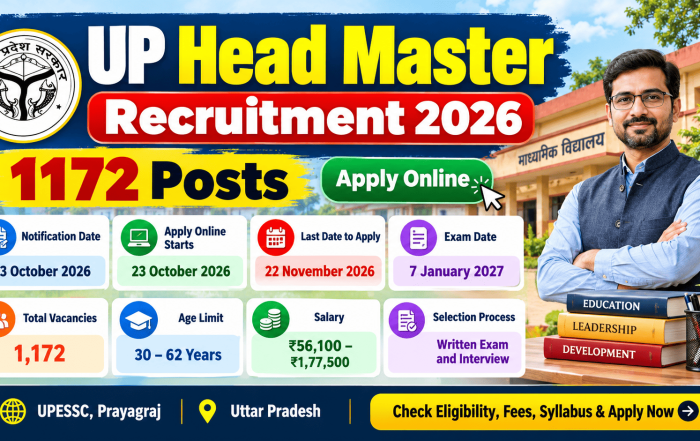
UP Head Master Recruitment 2026: 1172 Posts, Apply Online
Mission Gyan2026-10-24T15:47:04+05:30October 24, 2026|0 Comments
UP Head Master Recruitment 2026: 1172 Posts, Apply Online UP Head Master Recruitment 2026 notification has been released for 1,172 Head Master vacancies in Uttar Pradesh. The Uttar Pradesh Education Service Selection Commission (UPESSC), Prayagraj, [...]

DGMA Recruitment 2026: Apply Online for 30 MSA Posts
Mission Gyan2026-10-24T15:09:35+05:30October 24, 2026|1 Comment
DGMA Recruitment 2026: Apply Online for 30 MSA Posts DGMA Recruitment 2026 is open for 30 Management Support Associate (MSA) vacancies in Mumbai. The Directorate General of Maritime Administration (DGMA), under the Ministry of Ports, [...]
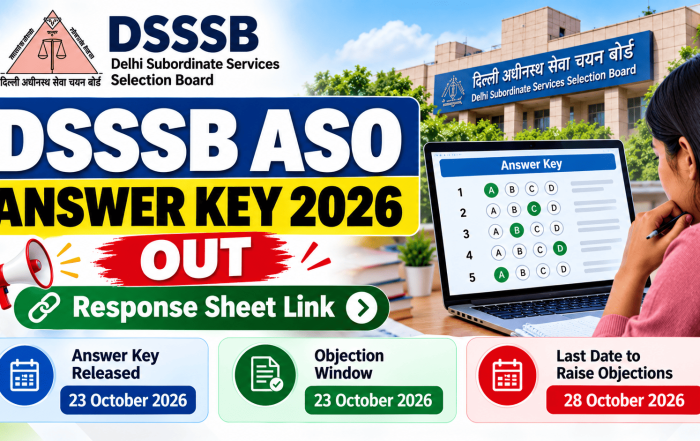
DSSSB ASO Answer Key 2026 Out, Response Sheet Link
Mission Gyan2026-10-24T14:19:08+05:30October 24, 2026|0 Comments
DSSSB ASO Answer Key 2026 Out, Response Sheet Link The DSSSB ASO Answer Key 2026 was released on 23 October 2026 by the Delhi Subordinate Services Selection Board (DSSSB). Candidates who appeared in the Grade-II/Assistant [...]
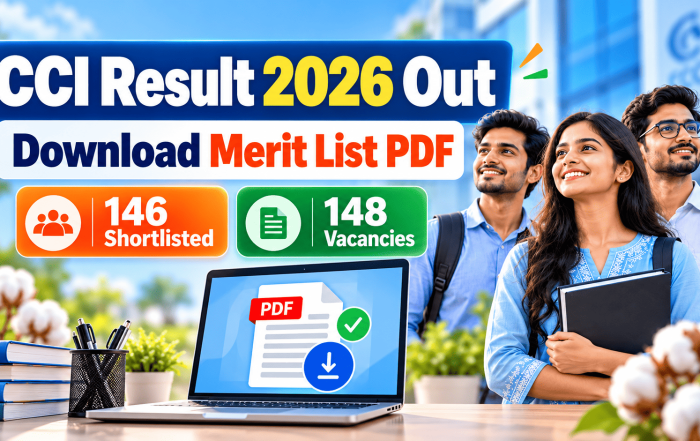
CCI Result 2026 Out: Download Merit List PDF
Mission Gyan2026-10-24T12:56:47+05:30October 24, 2026|0 Comments
CCI Result 2026 Out: Download Merit List PDF CCI Result 2026 was released on 23 October 2026 by the Cotton Corporation of India Limited (CCI). Candidates who appeared in the computer-based examination can now download [...]

UP TGT Notification 2026 Out: 17,735 Vacancies
Mission Gyan2026-10-24T12:23:35+05:30October 24, 2026|0 Comments
UP TGT Notification 2026 Out: 17,735 Teacher Vacancies UP TGT Notification 2026 Out: The Uttar Pradesh Education Service Selection Commission (UPESSC) has announced 17,735 Assistant Teacher vacancies in government-aided secondary schools across Uttar Pradesh. The [...]

UPESSC Principal Recruitment 2026: 1475 Posts
Mission Gyan2026-10-24T11:52:14+05:30October 24, 2026|0 Comments
UPESSC Principal Recruitment 2026: 1475 Posts UPESSC Principal Recruitment 2026 is now open for 1,475 Principal posts in aided schools across Uttar Pradesh. The Uttar Pradesh Education Service Selection Commission (UPESSC) released the notice on [...]

SSC GD Revised Result 2026 Out: Download Merit List
Mission Gyan2026-10-24T10:58:52+05:30October 24, 2026|0 Comments
SSC GD Revised Result 2026 Out: Download Merit List SSC GD Revised Result 2026 Out: The Staff Selection Commission (SSC) released the updated SSC GD Constable Result 2026 lists on 23 October 2026. Candidates can [...]
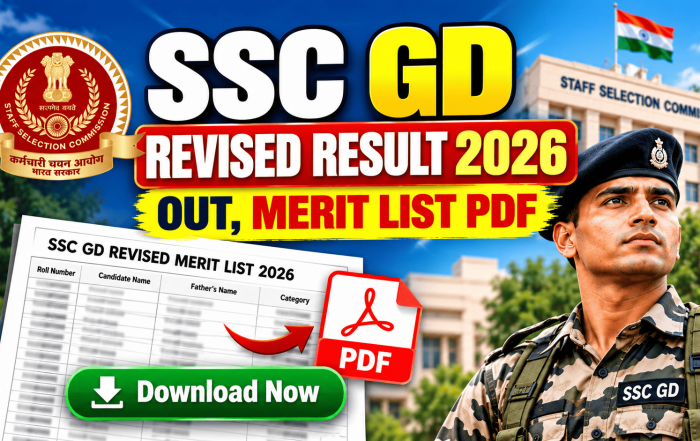
SSC GD Revised Result 2026 Out, Merit List PDF
Mission Gyan2026-10-23T16:50:29+05:30October 23, 2026|0 Comments
SSC GD Revised Result 2026 Out, Merit List PDF SSC GD Revised Result 2026 is out! The Staff Selection Commission (SSC) released updated merit lists on 23 October 2026. This update helps candidates understand their [...]
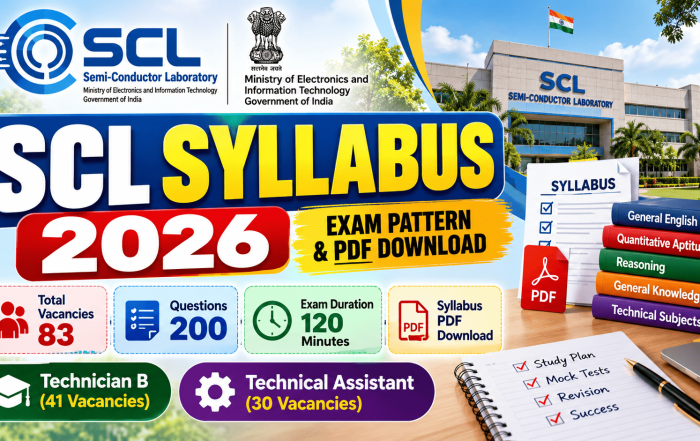
SCL Syllabus 2026: Exam Pattern & PDF Download
Mission Gyan2026-10-23T16:08:29+05:30October 23, 2026|0 Comments
SCL Syllabus 2026: Exam Pattern & PDF Download The SCL Syllabus 2026 is available in the official recruitment notification for Technician B and Technical Assistant posts. Candidates preparing for the Semi-Conductor Laboratory recruitment examination can [...]