As parents, one of the most significant responsibilities we undertake is ensuring our children receive a solid educational foundation. For many, this journey begins with nursery schooling, where the building blocks of learning are laid. In India, the Central Board of Secondary Education (CBSE) is one of the most recognized and widely adopted educational boards. Understanding the CBSE nursery syllabus is crucial for parents to support their child’s early learning effectively.
Understanding the CBSE Nursery Syllabus
The CBSE nursery syllabus is designed to provide a holistic learning experience for children aged 3-4 years. It focuses on fostering cognitive, social, emotional, and physical development through play-based activities and interactive learning methodologies. The syllabus aims to create a conducive environment where children can explore, experiment, and learn at their own pace.
S.No
Component
Description
1.
Cognitive Development
The syllabus introduces basic concepts such as colours, shapes, numbers, and letters through fun activities like games, puzzles, and rhymes. This helps stimulate the child’s cognitive abilities and lays the groundwork for future academic learning.
2.
Language Development
Language acquisition is a crucial aspect of early childhood education. The CBSE nursery syllabus emphasizes language development through storytelling, role-playing, and interactive sessions. Children are encouraged to express themselves verbally, develop vocabulary, and enhance communication skills.
3.
Social and Emotional Development
Nursery schooling provides an opportunity for children to interact with peers and develop social skills such as sharing, cooperation, and empathy. The syllabus includes activities that promote emotional well-being and self-awareness, fostering a positive self-image and confidence in children.
4.
Physical Development
Gross and fine motor skills are developed through various activities such as outdoor play, art and craft, and music and movement. These activities help children enhance their coordination, balance, and spatial awareness, laying the foundation for future physical activities and sports.
Key Components of Nursery Syllabus
Role of Parents in Supporting Nursery Learning:
Parents play a crucial role in supporting their children’s learning journey during the nursery years. Here are some ways parents can actively engage with the CBSE nursery syllabus:
1. Create a conducive learning environment at home by providing age-appropriate toys, books, and educational materials.
2. Encourage curiosity and exploration by engaging in conversations, asking open-ended questions, and fostering a love for learning.
3. Participate in school activities and events to stay informed about your child’s progress and to reinforce learning concepts at home.
4. Foster a positive attitude towards education by praising effort and progress, rather than focusing solely on outcomes.
Conclusion
The CBSE nursery syllabus is designed to provide a stimulating and nurturing environment for young learners to thrive. By understanding the key components of the syllabus and actively engaging with their child’s learning journey, parents can play a significant role in laying a strong educational foundation for their children. Together, parents and educators can empower young minds to explore, learn, and grow to their fullest potential.
Frequently Asked Questions (FAQ’s)
Q1. What is the CBSE Nursery Syllabus?
A1. The CBSE Nursery syllabus is a structured framework designed for children aged 3-4 years, focussing on their holistic development through play-based activities and interactive learning methodologies.
Q2. What are the key components of the CBSE nursery syllabus?
A2. The key components include cognitive, language, social, emotional, and physical development. Activities are designed to introduce basic concepts, foster language skills, promote social interaction, and enhance motor skills.
Q3. How is the CBSE nursery syllabus structured?
A3. The syllabus is structured to provide a balanced learning approach, incorporating academic and non-academic activities. It includes a variety of age-appropriate activities such as story-telling, rhymes, puzzles, art and craft, outdoor play, music & movement.
Q4.What is the role of parents in supporting nursery learning?
A4. Parents play a crucial role in supporting their children’s learning journey during the nursery years. They can create a conducive learning environment at home, encourage curiosity and exploration, participate in school activities, and foster a positive attitude towards education.
Q5. How can parents engage with the CBSE nursery syllabus at home?
A5. Parents can engage with the syllabus by providing age-appropriate toys and books, engaging in conversations and open-ended questions, participating in school activities, and praising effort and progress.
Q6. What is the significance of play-based learning in the CBSE nursery syllabus?
A6. Play-based learning is central to the CBSE nursery syllabus as it allows children to explore, experiment, and learn naturally and enjoyably. It helps stimulate cognitive, social, emotional, and physical development, laying the foundation for future academic success.
Q7.What resources are available to support parents in understanding the CBSE nursery syllabus?
A7. CBSE provides guidelines and resources for parents on its official website. Additionally, parents can consult with teachers, attend parenting workshops, and seek guidance from educational experts to understand better and support their child’s learning journey.
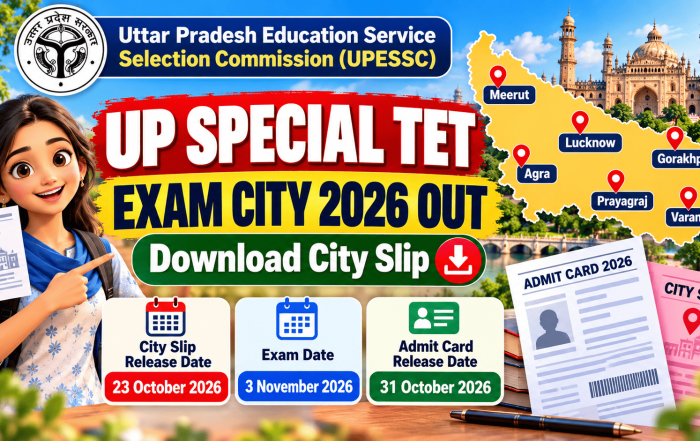
UP Special TET Exam City 2026 Out, Download City Slip The Uttar Pradesh Education Service Selection Commission (UPESSC) released the UP Special TET Exam City 2026 slip on 23 October 2026. Candidates who applied under [...]
UP Head Master Recruitment 2026: 1172 Posts, Apply Online UP Head Master Recruitment 2026 notification has been released for 1,172 Head Master vacancies in Uttar Pradesh. The Uttar Pradesh Education Service Selection Commission (UPESSC), Prayagraj, [...]
DGMA Recruitment 2026: Apply Online for 30 MSA Posts DGMA Recruitment 2026 is open for 30 Management Support Associate (MSA) vacancies in Mumbai. The Directorate General of Maritime Administration (DGMA), under the Ministry of Ports, [...]
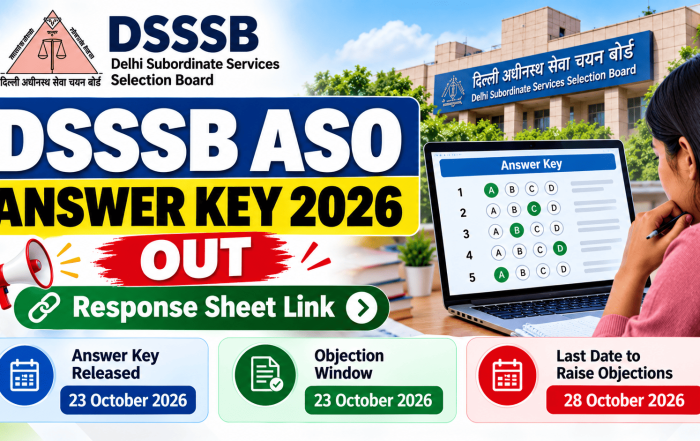
DSSSB ASO Answer Key 2026 Out, Response Sheet Link The DSSSB ASO Answer Key 2026 was released on 23 October 2026 by the Delhi Subordinate Services Selection Board (DSSSB). Candidates who appeared in the Grade-II/Assistant [...]
CCI Result 2026 Out: Download Merit List PDF CCI Result 2026 was released on 23 October 2026 by the Cotton Corporation of India Limited (CCI). Candidates who appeared in the computer-based examination can now download [...]
UP TGT Notification 2026 Out: 17,735 Teacher Vacancies UP TGT Notification 2026 Out: The Uttar Pradesh Education Service Selection Commission (UPESSC) has announced 17,735 Assistant Teacher vacancies in government-aided secondary schools across Uttar Pradesh. The [...]
UPESSC Principal Recruitment 2026: 1475 Posts UPESSC Principal Recruitment 2026 is now open for 1,475 Principal posts in aided schools across Uttar Pradesh. The Uttar Pradesh Education Service Selection Commission (UPESSC) released the notice on [...]
SSC GD Revised Result 2026 Out: Download Merit List SSC GD Revised Result 2026 Out: The Staff Selection Commission (SSC) released the updated SSC GD Constable Result 2026 lists on 23 October 2026. Candidates can [...]
SSC GD Revised Result 2026 Out, Merit List PDF SSC GD Revised Result 2026 is out! The Staff Selection Commission (SSC) released updated merit lists on 23 October 2026. This update helps candidates understand their [...]
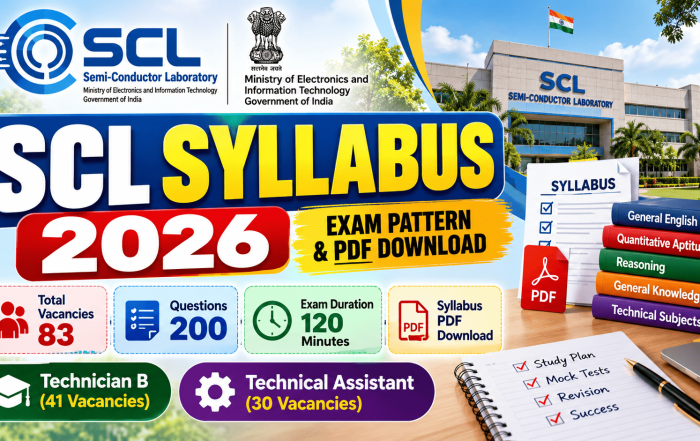
SCL Syllabus 2026: Exam Pattern & PDF Download The SCL Syllabus 2026 is available in the official recruitment notification for Technician B and Technical Assistant posts. Candidates preparing for the Semi-Conductor Laboratory recruitment examination can [...]