
Introduction
The Haryana CET Syllabus 2026 is the first thing every Group C and Group D candidate should understand. A clear syllabus helps you choose the right topics, manage your study time and avoid extra work.
The Haryana Staff Selection Commission conducts the Haryana Common Eligibility Test, also known as HSSC CET. This test is part of the hiring process for many Group C and Group D posts in Haryana.
In this guide, you will find the latest Haryana CET exam pattern, subject-wise syllabus, qualifying marks, OMR rules and preparation tips. In addition, the article explains the main differences between the Group C and Group D exams.
📌 Official Update: The Group D details are based on HSSC Advertisement No. 05/2026. However, candidates should still check the latest HSSC notice before applying or appearing for the exam.
Haryana CET Syllabus 2026: Overview
| Particular | Details |
|---|---|
| Examination name | Haryana Common Eligibility Test |
| Short name | Haryana CET or HSSC CET |
| Conducting body | Haryana Staff Selection Commission |
| Recruitment groups | Group C and Group D |
| Question type | Multiple-choice questions |
| Examination mode | Offline and OMR-based |
| Paper language | Hindi and English |
| Group D paper level | Matriculation |
| Group C paper level | Senior secondary or 10+2 |
| Language-paper level | Matriculation |
| Official source | HSSC official website |
Haryana CET Group D 2026 Important Dates
HSSC released Advertisement No. 05/2026 for the Group D Common Eligibility Test. Therefore, candidates should note the following dates carefully.
| Event | Date |
|---|---|
| Notification release date | June 18, 2026 |
| Online registration begins | June 19, 2026 |
| Last date to apply | July 3, 2026, up to 11:59 PM |
| Last date to pay the fee | July 6, 2026, up to 11:59 PM |
| Application correction period | July 7 to July 9, 2026 |
| Admit card date | To be announced |
| Examination date | To be announced |
Candidates should complete the form early. As a result, they can avoid payment errors, slow website speed and last-minute document problems.
What Is Haryana CET?
Haryana CET is a state-level eligibility test used for Group C and Group D recruitment.
For Group D posts, CET marks play an important role in the selection process. However, final selection also depends on eligibility, available posts, reservation rules and document checks.
Group C recruitment may include another written test after CET. In addition, some posts may require a skill test or another post-based test.
Therefore, candidates should always read the notice for the post they plan to apply for.
Haryana CET Group D Exam Pattern 2026
The Haryana CET Group D paper contains 100 multiple-choice questions. Each question carries one mark.
| Exam Feature | Details |
|---|---|
| Total questions | 100 |
| Total marks | 100 |
| Marks for each question | 1 |
| Examination duration | 1 hour 45 minutes |
| Examination mode | Offline OMR |
| Question level | Matriculation |
| Paper language | Hindi and English |
| All questions compulsory | Yes |
| Negative marking for a wrong answer | No |
| Penalty for leaving every bubble blank | Minus 1 mark |
| General-category qualifying marks | 50% |
| Reserved-category qualifying marks | 40% |
Although there is no normal negative marking, candidates must follow the OMR rules. In particular, they should mark the fifth bubble when they do not want to answer a question
Haryana CET Group D Subject Weightage
The Group D syllabus has two main parts.
| Part | Subjects | Weightage |
|---|---|---|
| Part A | General Awareness, General Science, Reasoning, Mathematics, English, Hindi and related subjects | 75% |
| Part B | Haryana history, current affairs, geography, literature, environment, economy and culture | 25% |
| Total | — | 100% |
Haryana CET Group D Syllabus 2026
General Awareness and General Science
This section checks your knowledge of India, nearby countries and basic science.
Important topics include:
- Indian history
- Indian polity
- Indian Constitution
- Indian geography
- Indian art and culture
- India and its neighbouring countries
- Important national events
- Current affairs
- General science
- Basic physics
- Basic chemistry
- Basic biology
The questions are generally based on the matriculation level. Therefore, candidates should focus on basic facts and clear concepts.
Reasoning Ability
The Reasoning section checks logical thinking, observation and problem-solving skills.
Key topics include:
- Alphabet order
- Number series
- Letter series
- Coding and decoding
- Direction and distance
- Order and ranking
- Blood relations
- Analogy
- Classification
- Clock and calendar
- Mirror images
- Water images
- Syllogism
- Seating arrangement
- Missing characters
- Statement and assumption
- Statement and conclusion
- Figure counting
- Non-verbal series
Regular practice is important. Moreover, solving mixed questions can improve both speed and accuracy.
Quantitative Ability
This section is based on basic mathematics.
Prepare the following topics:
- Number system
- Simplification
- Decimals
- Fractions
- Relations between numbers
- LCM
- HCF
- Ratio and proportion
- Percentage
- Roots
- Average
- Profit and loss
- Discount
- Simple interest
- Compound interest
- Mensuration
- Partnership
- Mixture and allegation
- Time and work
- Time and distance
- Basic trigonometry
- Basic algebra
- Geometry
First, understand the formulas. Next, solve easy questions before moving to difficult ones. As a result, your calculation speed will improve.
English Language
The English section checks basic grammar, vocabulary and sentence use.
Important topics include:
- English grammar
- Error spotting
- Fill in the blanks
- Synonyms
- Antonyms
- Correct spelling
- Misspelt words
- Idioms and phrases
- Sentence improvement
- Active and passive voice
- Direct and indirect speech
- Sentence rearrangement
- Tenses
In addition, reading short passages can improve vocabulary and sentence understanding.
Hindi Language
हिंदी अनुभाग में व्याकरण, शब्दावली और वाक्य-रचना से जुड़े प्रश्न पूछे जाते हैं।
मुख्य विषय हैं:
- वर्ण
- स्वर और व्यंजन
- शब्द
- संज्ञा
- सर्वनाम
- विशेषण
- क्रिया
- क्रियाविशेषण
- वचन
- लिंग
- कारक
- काल
- तद्भव और तत्सम शब्द
- अलंकार
- विकारी और अविकारी शब्द
- पद और पदबंध
- मुहावरे और लोकोक्तियाँ
- संधि
- उपसर्ग और प्रत्यय
- समास
- पर्यायवाची शब्द
- विलोम शब्द
- अनेकार्थी शब्द
- वाक्य शोधन
- विराम-चिह्न
- अनेक शब्दों के लिए एक शब्द
सबसे पहले व्याकरण के नियम समझें। इसके बाद उदाहरण आधारित प्रश्न हल करें। इस प्रकार, आपकी भाषा पर पकड़ बेहतर होगी।
Haryana General Knowledge
Haryana General Knowledge carries 25% weightage. Therefore, it is one of the most important parts of the Haryana CET syllabus.
Candidates should study:
- History of Haryana
- Haryana current affairs
- Haryana literature
- Physical geography
- Political geography
- Haryana economy
- Civics and administration
- Haryana polity
- Environment and ecology
- Art and culture
- Customs and traditions
- Haryana society
- Important events
- Historical places
- Cultural places
- Famous personalities
- State government schemes
- Sports
- Awards and honours
For better results, study Haryana GK every day. Also, revise short notes at least once a week.
Haryana CET Fifth-Bubble Rule
The fifth-bubble rule is very important in the Haryana CET exam.
When You Know the Answer
Mark the bubble that matches your chosen answer.
When You Want to Skip a Question
Mark the fifth bubble on the OMR sheet.
When You Leave Every Bubble Blank
One mark may be deducted for that question.
There is no normal penalty for a wrong answer. However, leaving all five bubbles blank can reduce your score.
📝 OMR Tip: Keep a few minutes at the end to check the OMR sheet. This way, you can find any question that was left fully blank.
Haryana CET Group D Qualifying Marks
| Category | Minimum Qualifying Marks |
|---|---|
| General category | 50% |
| Eligible reserved categories | 40% |
Reserved-category candidates get a 10% relaxation in the qualifying marks.
However, passing CET does not guarantee a job. Final selection also depends on merit, vacancies, eligibility, category rules and document checks.
Haryana CET Group C Syllabus 2026
The Group C syllabus is generally based on the official HSSC Group C CET pattern. However, a later post-wise or group-wise exam may have a different syllabus.
Therefore, candidates should check both the common CET syllabus and the notice for their chosen post.
Haryana CET Group C Exam Pattern
| Exam Feature | Details |
|---|---|
| Total questions | 100 |
| Total marks | 100 |
| Examination duration | 1 hour 45 minutes |
| Examination mode | Offline OMR |
| Paper language | Hindi and English |
| General paper level | Senior secondary or 10+2 |
| Hindi and English level | Matriculation |
| General qualifying marks | 50% |
| Reserved-category qualifying marks | 40% |
| Normal negative marking | No |
| Fully blank response | Minus 1 mark under the fifth-bubble rule |
Haryana CET Group C Subject Weightage
| Part | Subjects | Weightage |
|---|---|---|
| Part A | General Awareness, Reasoning, Mathematics, English, Hindi and Computer Knowledge | 75% |
| Part B | Haryana history, current affairs, geography, literature, environment and culture | 25% |
| Total | — | 100% |
HSSC CET Group C Subject-Wise Syllabus
General Awareness
This section may include:
- Current events
- Indian history
- Indian polity
- Indian Constitution
- Art and culture
- Indian geography
- Economics
- Government policy
- National organisations
- International organisations
- Environment
- Climate
- Important events
- General science
- India and neighbouring countries
Candidates should prepare static GK as well as current affairs. In addition, they should revise important facts often.
Computer Knowledge
Computer Knowledge is part of the Group C syllabus.
Important topics include:
- Basic computer structure
- Central Processing Unit
- Input devices
- Output devices
- Computer memory
- Storage devices
- Backup devices
- Computer ports
- Windows Explorer
- Keyboard shortcuts
- Windows operating system
- Microsoft Word
- Microsoft Excel
- Microsoft PowerPoint
- Internet basics
- Web browsing
- Search engines
- Uploading and downloading
- Email management
For example, candidates should know basic shortcuts, file handling and common office tools.
Reasoning
The Group C Reasoning syllabus includes verbal and non-verbal questions.
Prepare:
- Semantic analogy
- Figural analogy
- Symbolic operations
- Coding and decoding
- Number series
- Alphabet series
- Classification
- Venn diagrams
- Space orientation
- Embedded figures
- Paper folding
- Punched-hole patterns
- Relationship concepts
- Word formation
- Arithmetic reasoning
- Critical thinking
- Decision-making
- Problem-solving
- Observation
- Social intelligence
- Emotional intelligence
Meanwhile, regular practice will help you deal with time-based questions.
Quantitative Ability
Important topics include:
- Number system
- Simplification
- Decimals and fractions
- Relations between numbers
- LCM and HCF
- Ratio and proportion
- Percentage
- Roots
- Average
- Profit and loss
- Discount
- Simple and compound interest
- Mensuration
- Partnership
- Mixture and allegation
- Time and work
- Time and distance
- Tables and graphs
- Trigonometry
- Algebra
- Geometry
Start with basic chapters such as percentage, ratio and average. After that, move to algebra, geometry and trigonometry.
English Language
The English syllabus includes:
- Error spotting
- Fill in the blanks
- Synonyms
- Homonyms
- Antonyms
- Spelling correction
- Idioms and phrases
- One-word substitution
- Sentence improvement
- Active and passive voice
- Direct and indirect speech
- Sentence rearrangement
- Tenses
- Cloze passages
- Reading comprehension
Besides learning grammar, candidates should read simple English articles. This can improve both vocabulary and comprehension.
Hindi Language
ग्रुप C हिंदी पाठ्यक्रम के मुख्य विषय हैं:
- शब्द और वाक्य
- अलंकार
- विकारी और अविकारी शब्द
- पद और पदबंध
- मुहावरे और लोकोक्तियाँ
- संधि
- उपसर्ग और प्रत्यय
- समास
- पर्यायवाची शब्द
- विलोम शब्द
- अनेकार्थी शब्द
- अयोगवाह
- वाक्य शोधन
- निपात
- विराम-चिह्न
- संबंधबोधक
- अनेक शब्दों के लिए एक शब्द
- एकार्थक शब्द
- युग्म शब्द
- वर्तनी शुद्धीकरण
- वर्ण, स्वर और व्यंजन
- विदेशी ध्वनियाँ
- संज्ञा
- सर्वनाम
- विशेषण
- क्रिया और क्रियाविशेषण
- समुच्चयबोधक
- विस्मयादिबोधक
- वचन
- लिंग
- कारक
- काल
- तद्भव और तत्सम शब्द
नियमित अभ्यास से व्याकरण संबंधी गलतियाँ कम होती हैं। साथ ही, शब्दावली के छोटे नोट्स जल्दी दोहराए जा सकते हैं।
Haryana General Knowledge
The Group C Haryana GK section includes:
- Haryana history
- Haryana literature
- Haryana geography
- State economy
- Haryana civics
- Haryana polity
- Environment
- Art and culture
- Customs
- Social traditions
- Haryana society
- Current affairs
- Important state events
Because this section carries 25% weightage, it deserves daily study time.
Haryana CET Group C vs Group D
| Feature | Group C | Group D |
|---|---|---|
| General paper level | Senior secondary or 10+2 | Matriculation |
| Hindi and English level | Matriculation | Matriculation |
| Computer Knowledge | Included | Not separately listed |
| Haryana-specific weightage | 25% | 25% |
| Examination mode | Offline OMR | Offline OMR |
| Further examination | May be required | Depends on recruitment rules |
| Skill test | May apply to some posts | Depends on the post |
In short, Group C is generally more advanced. Group D, on the other hand, focuses mainly on matriculation-level knowledge.
How to Prepare for Haryana CET 2026
1
Start with the Official Syllabus
First, read the full syllabus. Then, divide the topics into strong, average and weak areas.
This method will help you set clear study goals.
2
Study Haryana GK Daily
Haryana topics carry 25% weightage. Therefore, they should be part of your daily timetable.
Make short notes on:
- History
- Districts
- Geography
- Culture
- Government schemes
- Famous people
- Current affairs
In addition, revise these notes once every week.
3
Improve Basic Mathematics
Begin with easy and useful topics such as:
- Simplification
- Percentage
- Ratio
- Average
- Profit and loss
- Time and work
- Time and distance
Next, move to advanced topics. Also, keep a small notebook for formulas.
4
Practise Reasoning Every Day
Solve a mixed set of questions daily. However, do not spend too much time on one difficult question.
Instead, mark it for review and continue with the rest of the paper.
5
Prepare Hindi and English Together
Divide language study into grammar, vocabulary and reading.
For example, you can study English grammar on one day and Hindi grammar on the next. Meanwhile, revise vocabulary in short daily sessions.
6
Take OMR-Based Mock Tests
Online tests are useful. However, printed OMR practice is also important.
It can improve:
- Bubble-filling accuracy
- Fifth-bubble awareness
- Time management
- Question selection
- Final checking
As a result, you will feel more confident during the real examination.
7
Review Every Mock Test
After each test, check your mistakes.
Divide them into:
- Concept errors
- Calculation errors
- Careless errors
- Time-management errors
- OMR errors
Finally, revise the weak areas before taking the next mock test.
Suggested Daily Study Plan
| Study Area | Suggested Time |
|---|---|
| Haryana GK and current affairs | 60 minutes |
| Mathematics | 60 minutes |
| Reasoning | 45 minutes |
| Hindi or English | 45 minutes |
| General Awareness or Science | 45 minutes |
| Revision and mock-test review | 45 minutes |
This plan is only a guide. Therefore, you can change it according to your free time and subject level.
Common Mistakes to Avoid
Avoid the following mistakes:
- Studying without checking the official syllabus
- Trusting unofficial subject-wise question counts
- Ignoring Haryana GK
- Learning formulas without solving questions
- Using too many books
- Taking mock tests without reviewing them
- Ignoring Hindi and English
- Leaving revision for the final week
- Forgetting the fifth-bubble rule
- Trusting unconfirmed examination dates
Frequently Asked Questions
1
What is the Haryana CET Group D exam pattern for 2026?
The Group D paper has 100 multiple-choice questions for 100 marks. In addition, candidates get 1 hour and 45 minutes to complete the OMR-based exam.
2
Is there negative marking in Haryana CET 2026?
There is no normal negative marking for a wrong answer. However, one mark may be deducted when all bubbles for a question are left blank.
3
What are the Haryana CET qualifying marks?
General-category candidates need at least 50%. Meanwhile, eligible reserved-category candidates need at least 40%.
4
What is the difference between the Group C and Group D syllabi?
Group C is generally based on the 10+2 level and includes Computer Knowledge. In contrast, Group D is based mainly on the matriculation level.
5
Which section is most important for Haryana CET?
Haryana General Knowledge is very important because it carries 25% weightage. However, candidates should prepare every subject because the common sections carry the remaining 75%.
Conclusion
The Haryana CET Syllabus 2026 becomes easier when you follow a clear study plan. First, understand the syllabus. Next, focus on Haryana GK, Mathematics, Reasoning, Hindi and English.
In addition, take regular mock tests and practise on OMR sheets. Most importantly, remember the fifth-bubble rule because a fully blank answer may reduce your score.
✅ Save this guide for revision and share it with other Haryana CET Group C and Group D candidates. Finally, keep checking the official HSSC website for exam dates, admit cards, vacancies and new notices.
Disclaimer: This article is for education and exam preparation. Although the details are based on HSSC information, candidates should check the latest official notification, correction notice, exam schedule and post-wise syllabus before applying.
RECENT POSTS

RRB Section Controller City Intimation Slip 2026 Out
Mission Gyan2026-10-03T12:12:36+05:30October 3, 2026|0 Comments
RRB Section Controller City Intimation Slip 2026 Out The RRB Section Controller City Intimation Slip 2026 is now available for candidates who will take the Computer-Based Test under CEN 03/2026. Candidates can now check their [...]
IFFCO AGT Syllabus 2026 & Exam Pattern
Mission Gyan2026-10-02T14:31:36+05:30October 2, 2026|0 Comments
IFFCO AGT Syllabus 2026 & Exam Pattern The IFFCO AGT Syllabus 2026 is one of the most important resources for candidates preparing for the Agriculture Graduate Trainee examination conducted by Indian Farmers Fertiliser Cooperative Limited. [...]

IFFCO AGT Recruitment 2026: Apply Online, ₹33,300 Stipend
Mission Gyan2026-10-02T11:24:57+05:30October 2, 2026|0 Comments
IFFCO AGT Recruitment 2026: Apply Online, ₹33,300 Stipend IFFCO AGT Recruitment 2026 has been announced for eligible B.Sc. Agriculture graduates. Indian Farmers Fertiliser Cooperative Limited is accepting online applications for the post of Agriculture Graduate [...]
IBPS RRB Clerk 2nd Reserve List 2026 Out, Check Status
Mission Gyan2026-10-01T17:01:05+05:30October 1, 2026|0 Comments
IBPS RRB Clerk 2nd Reserve List 2026 Out, Check Status The IBPS RRB Clerk 2nd Reserve List 2026 is now available for candidates waiting for allotment under CRP-RRBs-XIV. The Institute of Banking Personnel Selection released [...]
SCI Junior Court Assistant Cut Off 2026, Previous Year Marks
Mission Gyan2026-10-01T16:10:52+05:30October 1, 2026|1 Comment
SCI Junior Court Assistant Cut Off 2026 The SCI Junior Court Assistant Cut Off 2026 will help candidates understand the minimum score needed to qualify for the next stage of recruitment. The Supreme Court of [...]
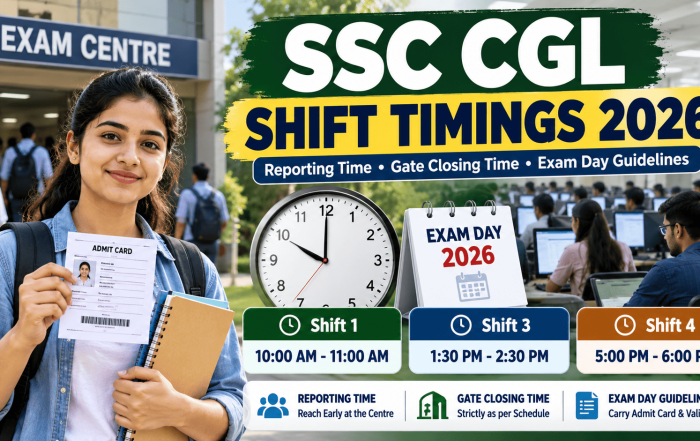
SSC CGL Shift Timings 2026: Reporting Time & Rules
Mission Gyan2026-10-01T12:50:00+05:30October 1, 2026|0 Comments
SSC CGL Shift Timings 2026: Reporting Time & Rules Candidates appearing for the SSC CGL Tier 1 Exam 2026 should carefully check their shift timing, reporting time and gate-closing time before visiting the examination centre. [...]
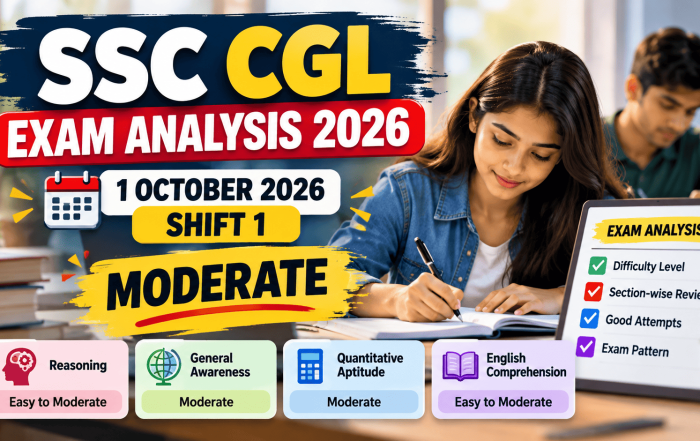
SSC CGL Exam Analysis 1 October 2026: Shift 1 Review
Mission Gyan2026-10-01T12:22:27+05:30October 1, 2026|1 Comment
SSC CGL Exam Analysis 1 October 2026: Shift 1 Review The SSC CGL Exam Analysis 1 October 2026 gives candidates a clear view of the Shift 1 paper. It covers the difficulty level, section-wise review, [...]
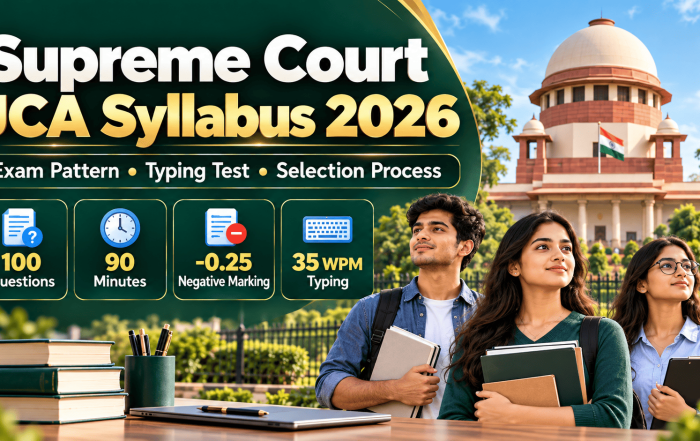
Supreme Court JCA Syllabus 2026, Exam Pattern & PDF
Mission Gyan2026-10-01T11:49:06+05:30October 1, 2026|0 Comments
Supreme Court JCA Syllabus 2026, Exam Pattern & PDF The Supreme Court JCA Syllabus 2026 and latest exam pattern are essential for candidates preparing for the Junior Court Assistant recruitment examination. The Supreme Court of [...]
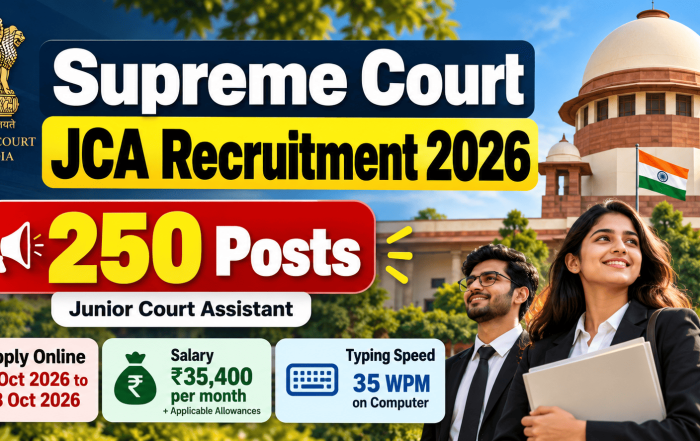
Supreme Court JCA Recruitment 2026: 250 Posts
Mission Gyan2026-10-01T11:04:51+05:30October 1, 2026|0 Comments
Supreme Court JCA Recruitment 2026: 250 Posts The Supreme Court of India (SCI) has released the Supreme Court JCA Recruitment 2026 notification for 250 tentative Junior Court Assistant posts. The recruitment is being conducted for [...]

IBPS Clerk Vacancy 2026 Revised to 11,663 Posts
Mission Gyan2026-09-30T17:21:01+05:30September 30, 2026|0 Comments
IBPS Clerk Vacancy 2026 Revised to 11,663 Posts The IBPS Clerk Vacancy 2026 has increased to 11,663 posts after the addition of 260 new vacancies. This recruitment comes under the CRP CSA-XVI cycle for the [...]