Home » CBSE Class 10 Science Course Structure 2022-2023
In the CBSE Class 10 curriculum, students are introduced to various branches of science, including Physics, Chemistry, and Biology. The subject is designed to help students understand the fundamental concepts and principles of science, as well as to develop their critical thinking, analytical, and problem-solving skills. Through a combination of theoretical knowledge and practical applications, students are exposed to the wonders of the natural world and the role of science in shaping our understanding .
UNIT NO
UNIT NAME
MARKS
1
Chemical Substances-Nature and Behavior
25
2
World of Living
25
3
Natural Phenomena
12
4
Effects of Current
13
5
Natural Resources
05
6
Total
80
7
Internal assessment
20
Grand Total
100
You can download whole science syllabus from below mentioned link.
Theme: Materials
Unit 1: Chemical Substances – Nature and Behaviour
Chemical reactions:
Chemical equation, Balanced chemical equation, implications of a balanced chemical equation, types of chemical reactions: combination, decomposition, displacement, double displacement, precipitation, endothermic exothermic reactions, oxidation and reduction.
Acids, bases and salts:
Their definitions in terms of furnishing of H+ and OH– ions, General properties, examples and uses, neutralization, concept of pH scale (Definition relating to logarithm not required), importance of pH in everyday life; preparation and uses of Sodium Hydroxide, Bleaching powder, Baking soda, Washing soda and Plaster of Paris.
Metals and nonmetals:
Properties of metals and non-metals; Reactivity series; Formation and properties of ionic compounds; Basic metallurgical processes; Corrosion and its prevention.
Carbon compounds:
Covalent bonding in carbon compounds. Versatile nature of carbon. Homologous series. Nomenclature of carbon compounds containing functional groups (halogens, alcohol, ketones, aldehydes, alkanes and alkynes), difference between saturated hydro carbons and unsaturated hydrocarbons. Chemical properties of carbon compounds (combustion, oxidation, addition and substitution reaction). Ethanol and Ethanoic acid (only properties and uses), soaps and detergents.
Theme: The World of the Living
Unit 2: World of Living
Life processes:
‘Living Being’s concept of nutrition, respiration, transport and excretion in plants and animals.
Control and co-ordination in animals and plants:
Tropic movements in plants; Introduction of plant hormones; Control and co-ordination in animals: Nervous system; Voluntary, involuntary and reflex action; Chemical co-ordination: animal hormones.
Reproduction:
Reproduction in animals and plants (asexual and sexual) reproductive health – need and methods of family planning. Safe sex vs HIV/AIDS. Child bearing and women’s health.
Heredity and Evolution: Heredity;
Mendel’s contribution- Laws for inheritance of traits: Sex determination: brief introduction: (topics excluded – evolution; evolution and classification and evolution should not be equated with progress).
Theme: Natural Phenomena
Unit 3: Natural Phenomena
Reflection of light Images formed by spherical mirrors, centre of curvature, principal axis, principal focus, focal length, mirror formula (Derivation not required),magnification.
Refraction; Laws of refraction, refractive index. Refraction of light by spherical lens; Image formed by spherical lenses; Lens formula(Derivation not required); Magnification. Power of a lens.
Human eye: Functioning of a lens in human eye, defects of vision and their corrections, applications of spherical mirrors and lenses. Refraction of light through a prism, dispersion of light, scattering of light, applications in dailylife (excluding colour of the sun at sunrise and sunset).
Theme: How Things Work Unit
4: Effects of Current
Electricity Electric current, potential difference and electric current. Ohm’s law; Resistance, Resistivity, Factors on which the resistance of a conductor depends. Series combination of resistors, parallel combination of resistors and its applications in daily life. Heating effect of electric current and its applications in daily life. Electric power, Interrelation between P, V, I and R.
Magnetic effects of current: Magnetic field, field lines, field due to a current carryingconductor, field due to current carrying coil or solenoid; Force on current carrying conductor, Fleming’s Left Hand Rule, Direct current. Alternating current: frequency of AC. Advantage of AC over DC. Domestic electric circuits.
Theme: Natural Resources
Unit 5: Natural Resources Our environment:
Eco-system, Environmental problems, Ozone depletion, waste production and their solutions. Biodegradable and non-biodegradable substances.
CONCLUSION
CBSE Class 10 Science is an essential subject that provides students with a comprehensive understanding of the natural world and its laws. Through a combination of theoretical knowledge and practical applications, students are exposed to the wonders of science and its relevance in their everyday lives. Additionally, the subject helps students develop essential skills that are highly valued in higher education and future careers.
FAQS
1.What is the syllabus of CBSE Class 10 Science?
A: The CBSE Class 10 Science syllabus includes topics such as electricity, magnetism, light, sound, chemical reactions, genetics, and evolution, among others.
2: What is the practical exam in CBSE Class 10 Science?
A: The practical exam in CBSE Class 10 Science is a laboratory-based assessment of students’ experimental and investigative skills.
3: Why is CBSE Class 10 Science important?
A: CBSE Class 10 Science is important because it provides students with a comprehensive understanding of the natural world and its laws. It also helps develop essential skills such as critical thinking, problem-solving, and analytical reasoning.
4: What are the career options after studying CBSE Class 10 Science?
A: The career options after studying CBSE Class 10 Science include engineering, medicine, research, and other scientific fields.
You can download CBSE 10th class science pdf from here
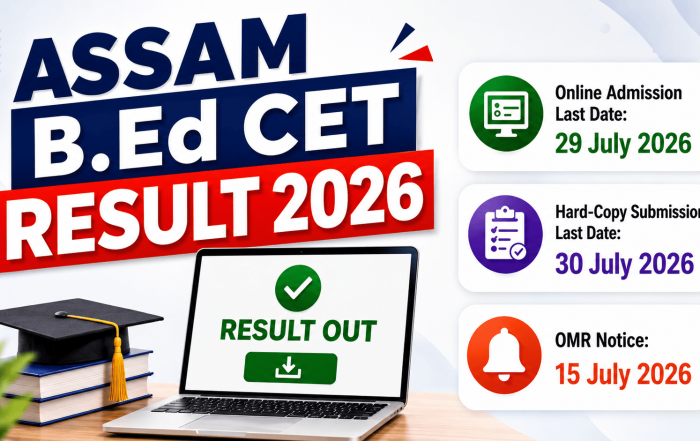
Assam B.Ed CET Result and Admission Dates 2026 Dibrugarh University has released the Assam B.Ed CET Result 2026. Therefore, candidates who took the entrance exam can now check and download their scorecards from the official [...]
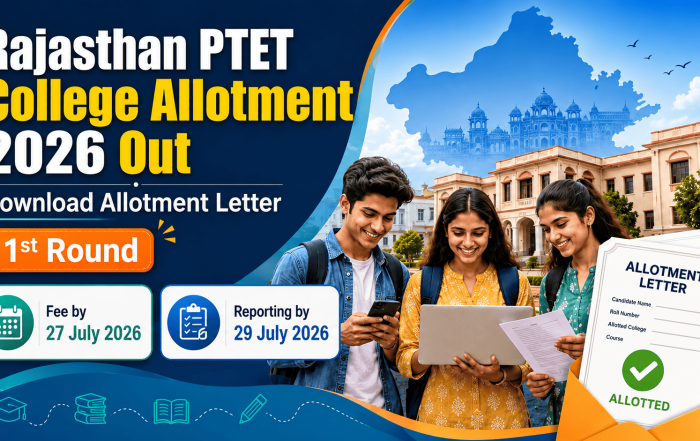
Rajasthan PTET College Allotment 2026 Out, Download Allotment Letter Vardhman Mahaveer Open University, Kota, released the Rajasthan PTET College Allotment 2026 on 21 July 2026. Students who joined the first counselling round can now check [...]
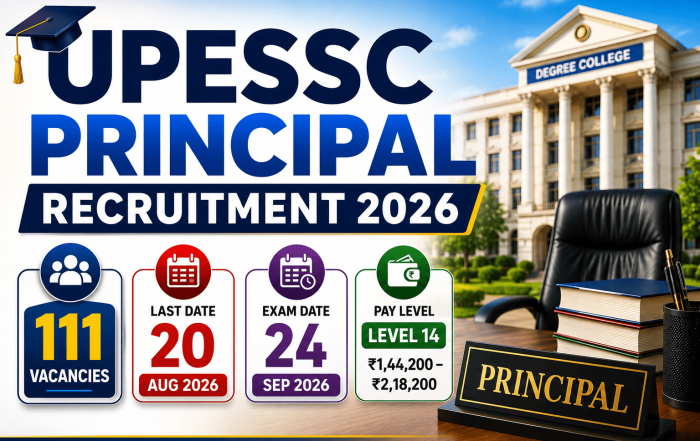
UPESSC Principal Recruitment 2026: Apply for 111 Posts The Uttar Pradesh Education Service Selection Commission, Prayagraj, has announced the UPESSC Principal Recruitment 2026 for 111 vacancies. The recruitment drive covers Principal posts in aided non-government [...]
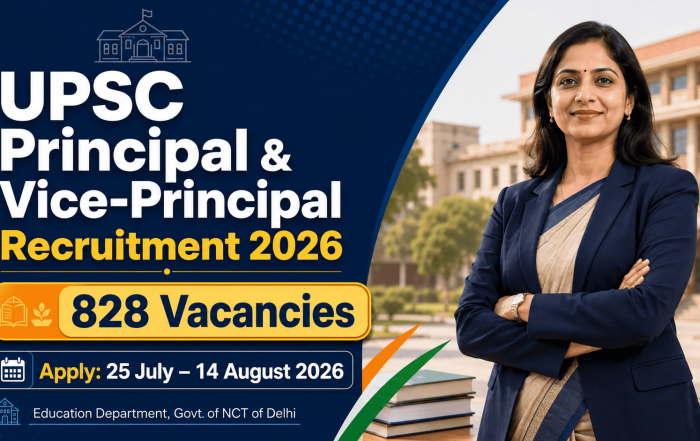
UPSC Principal Recruitment 2026: 828 Posts The UPSC Principal and Vice-Principal Recruitment 2026 notice covers 828 posts in the Education Department of the Government of NCT of Delhi. UPSC has listed 124 Principal posts and [...]
Class 6 Maths Ganita Prakash Syllabus 2026–27 The Class 6 Maths Ganita Prakash syllabus 2026–27 introduces students to mathematics through patterns, puzzles, practical situations, visual activities and logical reasoning. Published by NCERT, Ganita Prakash helps [...]
Bank of Baroda Apprentice Result 2026 Out The Bank of Baroda Apprentice Result 2026 came out on 18 July 2026. Candidates who took the online exam can now check their roll numbers on the official [...]
IBPS PO Notification 2026: 6,715 Vacancies The IBPS PO Notification 2026 has been released for the recruitment of Probationary Officers and Management Trainees under CRP PO/MT-XVI. According to the updated vacancy details, the recruitment drive [...]
IBPS AFO Recruitment 2026 Revised Vacancy Update The Institute of Banking Personnel Selection has revised the vacancies available through IBPS AFO Recruitment 2026. According to the updated vacancy annexure released on 20 July 2026, a [...]
SBI PO PET Question Paper 2026: Official Material The SBI PO PET Question Paper 2026 study material is available through the official State Bank of India Careers portal. Eligible candidates who selected Pre-Examination Training while [...]
RRB ALP Official Mock Test 2026 Latest Update The RRB ALP Official Mock Test 2026 helps Assistant Loco Pilot aspirants understand the computer-based examination interface before appearing for the actual test. Candidates can use the [...]